
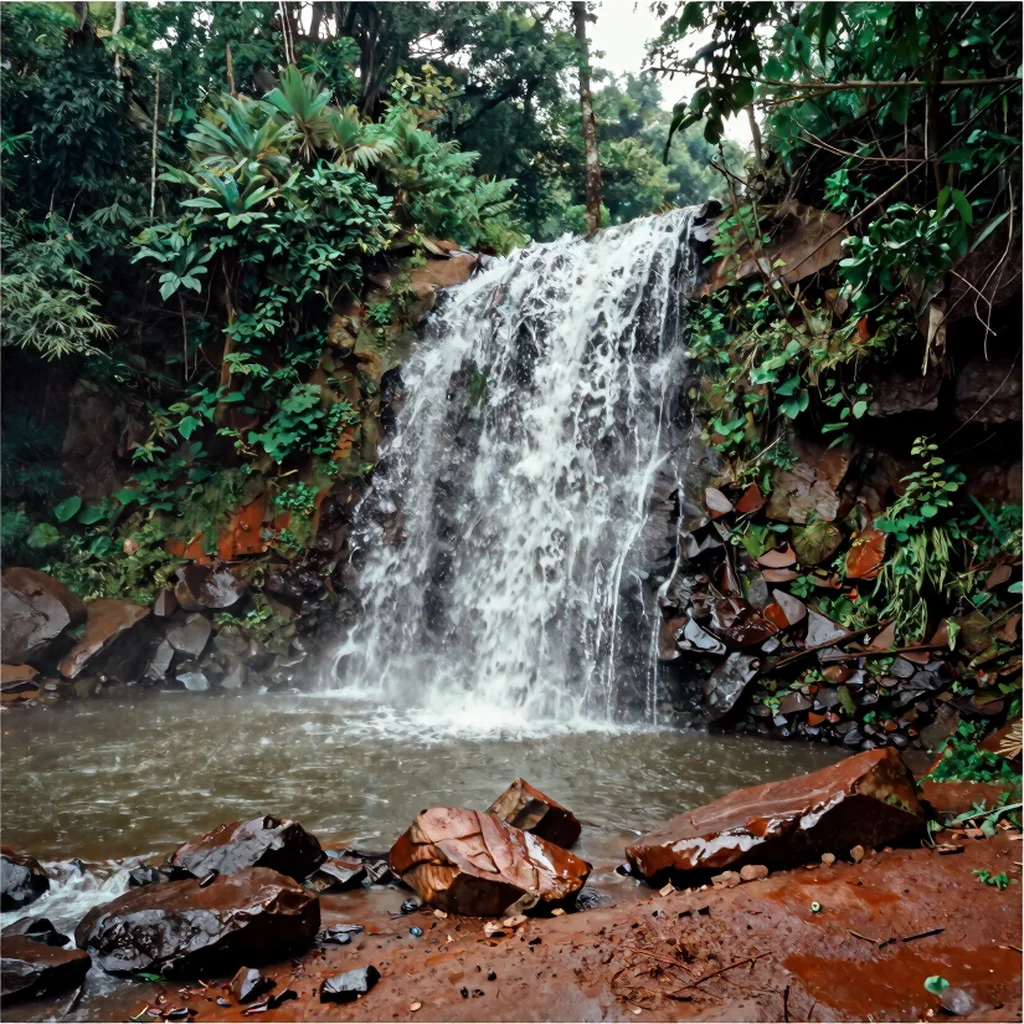
At a waterfall, the sound often reaches you before the view does. But the memorable part of a visit to Abujhmad may be the whole approach: red soil underfoot, a change in the forest, and the way recent rain alters the water. Treat the cascade as part of a living landscape, not a photo stop.
Season Changes the Experience
Rainfall can change both the volume of water and the conditions around it. Paths may be slippery, stream crossings may be different from what an older description suggests, and a route that seems manageable in one season may not be suitable in another. Check current local conditions before setting out.
Avoid assuming that a dramatic flow means an easy visit. Give yourself time to observe from a sensible place, and do not approach an edge or crossing simply to improve a photograph. If local guidance advises against continuing, turn back.
Notice What Surrounds the Water
Look beyond the cascade: the slope that feeds it, the plants growing near the water, and the sounds of the forest can tell a fuller story than a close-up image. Keep to appropriate paths and leave rocks, plants, and other natural features where they are. A quiet visit makes more room for noticing.
Take only photographs where photography is permitted, and be mindful of other visitors and nearby communities. Avoid turning a secluded place into a stage with loud music, litter, or a large setup. The landscape deserves attention without being rearranged for the camera.
Plan the Approach, Too
Before visiting any waterfall, confirm the current route, access arrangements, and whether local guidance recommends a particular approach. Do not rely on a place name or directions copied from an old post; details can be incomplete or out of date. The best plan leaves enough time to return without rushing.